
Madlener House
4 West Burton Place
Chicago, Illinois 60610
Telephone: 312.787.4071
info@grahamfoundation.org


- related publications
- RELATED WEBSITES
- related grantee projects
 Terra Infecta: Disease and the Italian Landscape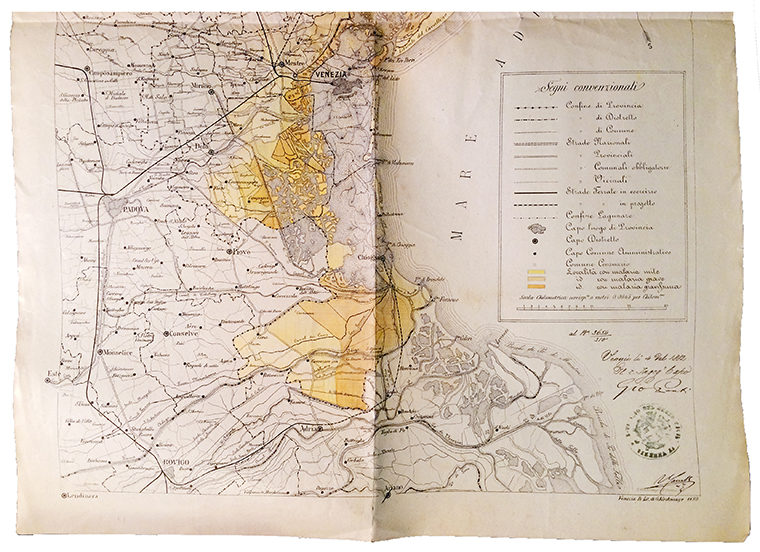
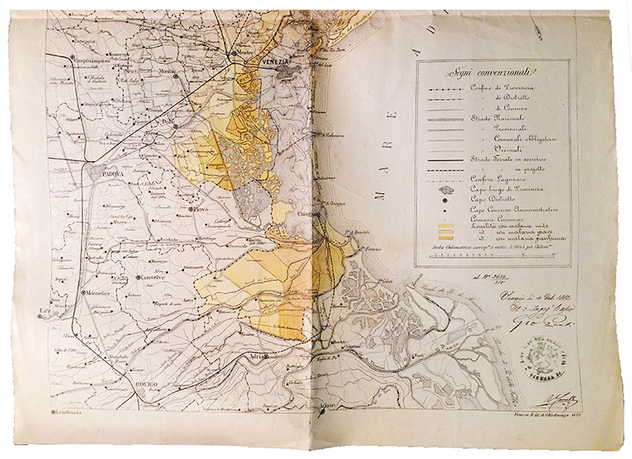
Hand-drawn map of malarial areas around Venice, 1882, Italy. Courtesy of Archivio storico del Senato, Rome.
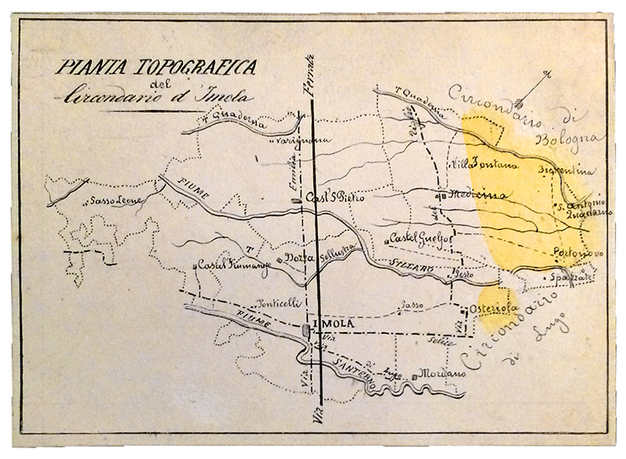
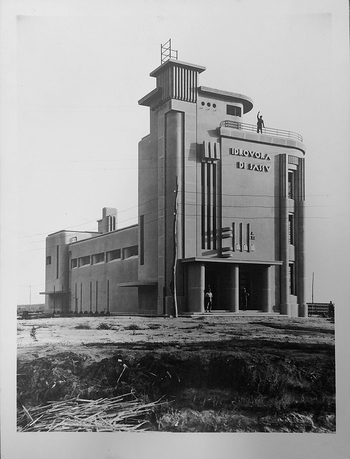
The increase in infectious disease events seen in the past twenty years—from Ebola to Zika—is rarely discussed as a spatial problem. Yet, not only is there a strong correlation between epidemics and the patterns of global urbanization and resource extraction; but some of the worst pandemics (such as HIV) originated at the same time as hygiene was becoming a main concern for urban planners. Terra Infecta is a research on such contradictory relationship between microbes and modernity. It draws in particular on the history of malaria eradication in Italy (1880–1950). The project is a visual archive documenting the different phases of the eradication efforts—the early medicalization, the Fascist projects of land reclamation and new town development, and DDT disinfection backed by the US. Through this case study, the project looks at architecture as part of a broader political agenda of environmental, urban, and social transformation.
Andrea Bagnato is a writer and architecture historian based in Genoa, Italy. He has taught at Piet Zwart Institute in Rotterdam, the Architectural Association in London, and the Decolonizing Architecture program at KKH Stockholm. His books include the monograph Terra Infecta: Disease and the Italian Landscape (MACK, 2025), the collective volumes Rights of Future Generations (Hatje Cantz, 2022), and A Moving Border: Alpine Cartographies of Climate Change (Columbia Books on Architecture and the City, 2019).
Copyright © 2008–2026 Graham Foundation. All rights reserved.