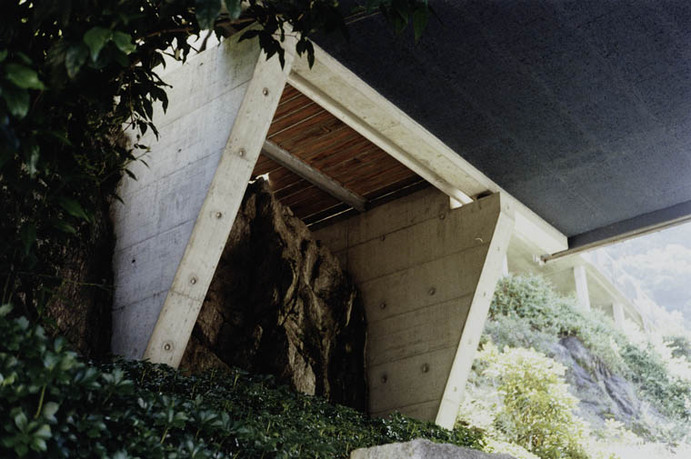
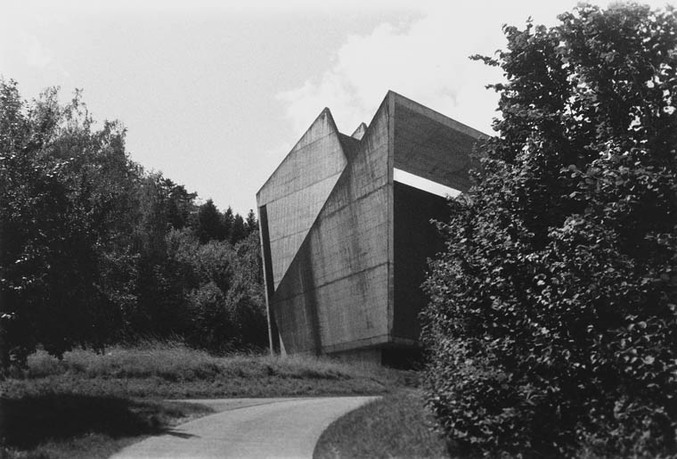
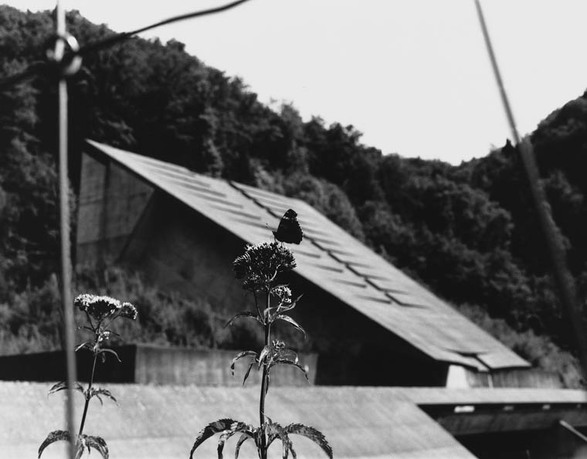
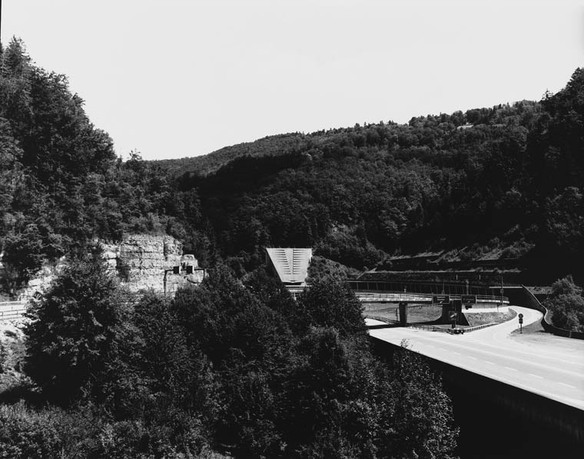
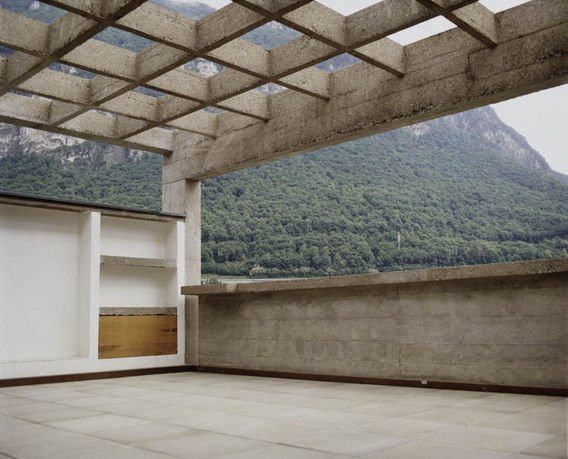
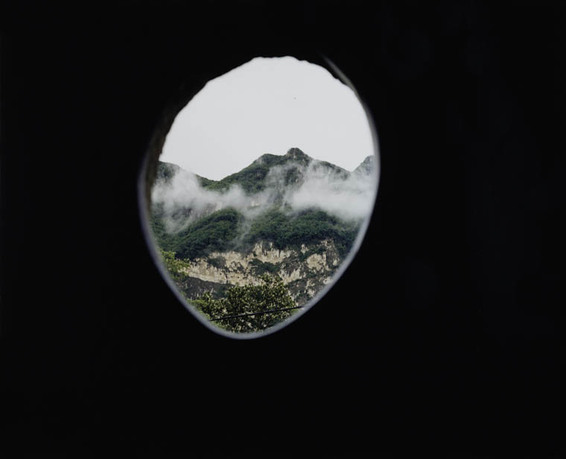
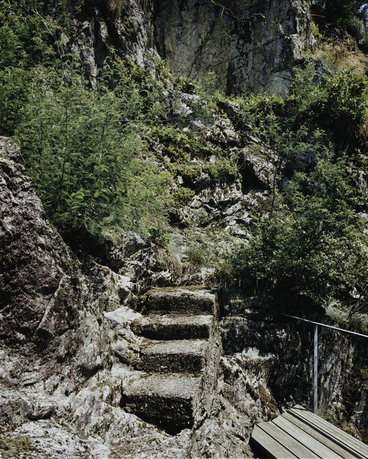
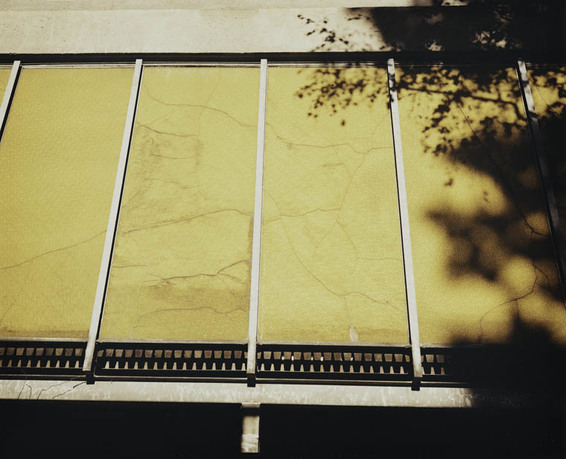
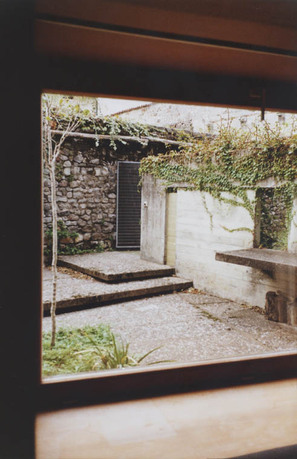
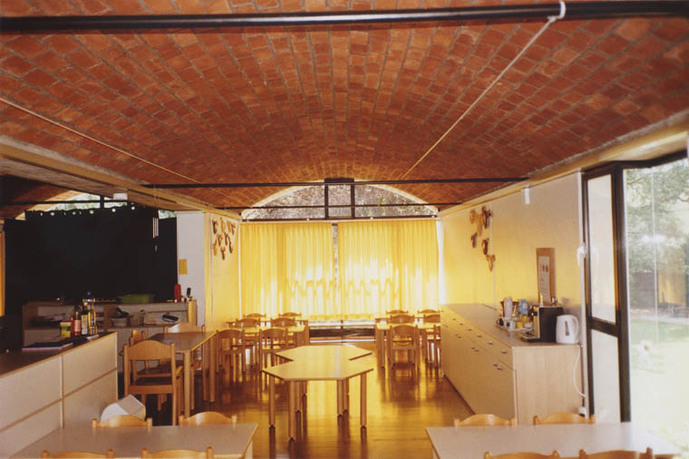
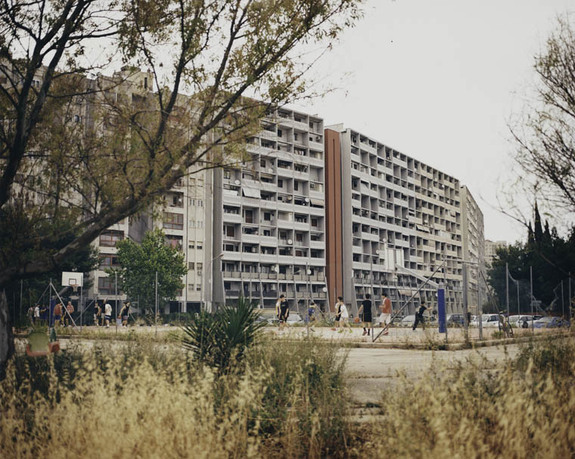
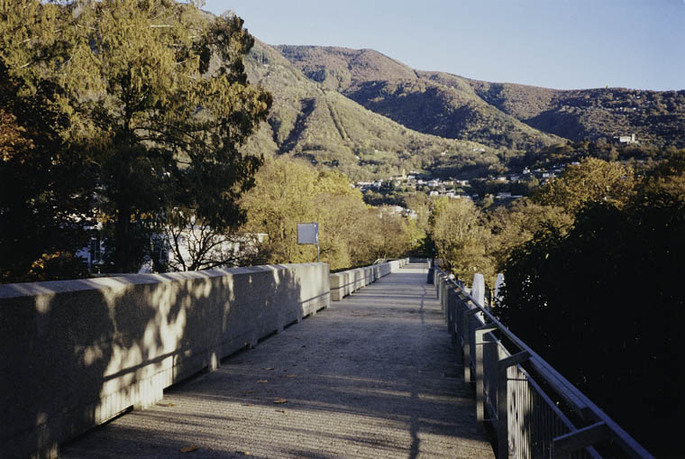
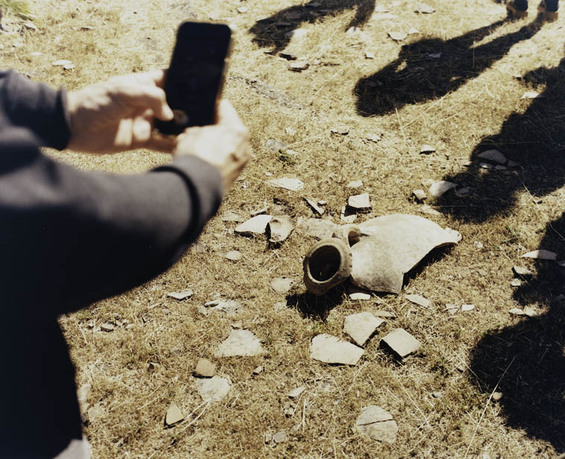
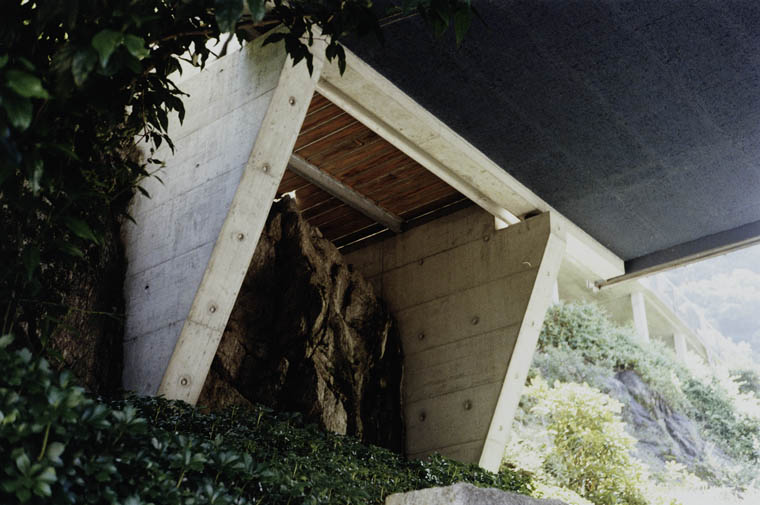
Guillaume Mojon and Veronika Spierenburg, “Untitled (Flora Ruchat-Roncati, ‘House Pescioli Ongaro (under the rock spur),’ Giubiasco, Switzerland, built 1994–97),” 2026. Archival pigment print, 10 1/4 x 6 7/8 in. Courtesy Guillaume Mojon and Veronika Spierenburg
This publication explores the pioneering work of Swiss architect Flora Ruchat-Roncati (1937–2012), the first female professor at ETH Zurich, whose multifaceted practice spanned swimming pools, schools, social housing, and major infrastructures such as the Gotthard Base Tunnel and the Transjurane motorway. Through new analog photography, it documents her projects in Switzerland and Italy. Developed in close collaboration between artist Veronika Spierenburg and designer Guillaume Mojon, the book mirrors Ruchat-Roncati’s own collective approach, resisting individual authorship. Working with different camera formats, films, and printing techniques, it emphasizes the tactile presence of both architecture and photography. The book features texts by Anna Ruchat, Eliana Perotti, Victoria Easton, and Helen Thomas, situating Flora Ruchat-Roncati’s legacy within feminist discourse, architectural history, and contemporary practice. It restores visibility to a largely overlooked figure and frames publishing itself as a critical, political act.
Guillaume Mojon is a Swiss graphic designer whose practice spans art direction, architectural publications, artist books, editorial design, signage systems, visual identity, and digital design. Born in Neuchâtel, he studied at the Werkplaats Typografie in Arnhem, the Netherlands, completing a master’s in graphic design. Since 2008, he has worked independently in Zurich, conceiving and developing projects at the intersection of design, architecture, and contemporary art. His clients include Kunsthalle Basel, Migros Museum für Gegenwartskunst, Edition Patrick Frey, Michael Umbricht Architekten, Design Biennale Zurich, Krone Couronne Art Center (Biel/Bienne), and Lars Müller Publishers. His design and editorial work includes peripher (Edition Patrick Frey, 2016); Dears Issues 1 to 5 (2020–23); The Quest (backbonebooks, 2019); Trended Structures (HSLU Hochschule Luzern, 2015); and Pretenzione Intenzione—Objects of Beauty and Bewilderment from the Archive of Harald Szeemann (Edition Patrick Frey, 2025).
Veronika Spierenburg is a Swiss-Dutch artist working at the intersection of sound, movement, and architecture. Her research-based, cross-disciplinary practice engages with ecological, geographic, and spatial questions as well as feminist perspectives, exploring how bodies, environments, and systems of perception are interrelated. She works collaboratively with dancers, graphic designers, and other artistic practitioners. She studied design at the Schule für Gestaltung Basel, photography at the Gerrit Rietveld Academy in Amsterdam, and earned an MFA from Central Saint Martins College, London. Spierenburg has participated in international residencies including Helsinki (HIAP), São Paulo (FAAP), Shanghai (Pro Helvetia), and Cité internationale des arts, Paris (Aargauer Kuratorium). She is the author of and contributor to several publications, among them In Order of Pages (Kodoji Press, 2013); Ecke, Hoek, Hörn (Edition Fink, 2014); Oya-ishi—Oya Stone (Art Paper Editions, 2017); Fliese und Fuge—Tile and Joint (Vexer Verlag, 2020); Cemitério das Âncoras / Cemetery of Anchors (Galerias Municipais de Lisboa, 2022); and Muzeum Susch Magazine—MS#6 (2025). Spierenburg recently ( October 2025 - March 2026) participated in the Schindler Fellowship residency program in Los Angeles as an artist-in-residence.