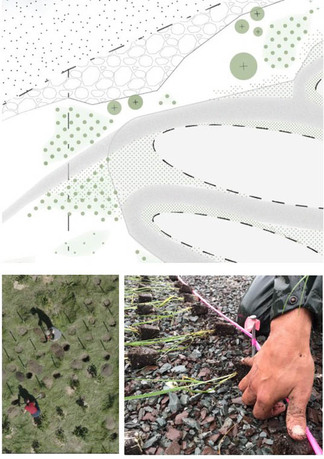
Rosetta S. Elkin, “Retreat along the Shoreline (aerial view),” Ste. Flavie, Québec, 2020. Digital photograph. Courtesy Practice Landscape. Photo: Rosetta S. Elkin
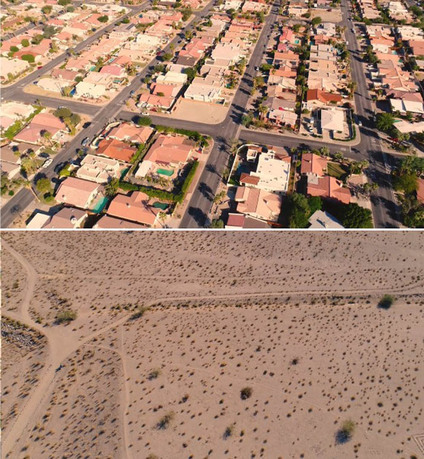
Regenerative Futures: Landscape and Design is an immersive exhibition featuring projects by Practice Landscape, SWA Group, Turenscape, Unit15X, and Yerrabingin + AKIN that address massive urbanization, resource extraction, global warming, and habitat loss through regenerative approaches to landscape architecture. Located across Asia, Australia, Africa, and North America, and ranging in scale from coastal settlements and abandoned mines to urban parks and peri-urban landscapes, the projects respond to evolving social, economic, and environmental complexities by proposing transformative realignments in our relationships with the land, other species, our communities, and future generations. The featured projects show how landscape architects reshape the way we live, enabling people to remain on the land by adapting to intensified climate activity; to retreat from the land to allow it to rewild; to connect to the land; to contend with collisions at the intersection of wildlands and cities; and to heal land wounded by human activity.
Founded in 2006 by Rosetta S. Elkin (University of Antwerp) in Massachusetts, Practice Landscape works with the living environment as designers, researchers, and gardeners. They embrace landscape as a process rather than a product and believe that the most meaningful landscapes emerge from a strategy of working with plants first. Their work encompasses a range of scales and landscape types, from regional landscape adaptations and large public parks to intimate gardens and private landscapes. Landscape gardening is a kind of applied research that deserves attention because adaptation is informed not just by cultural desire but also by the novel ecology of the land itself. The practice has prioritized garden-making, public exhibition, open-access publishing, and horticultural research for nearly two decades and is a registered Women Business Enterprise (WBE) in the state of Massachusetts. Elkin joined Pratt Institute (Brooklyn, New York) as the inaugural director of graduate landscape architecture in 2021.
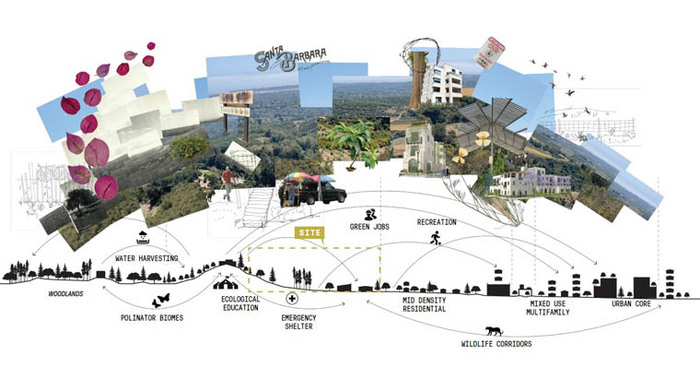
Founded in 1957, SWA Group is an employee-owned collective of eight independent global studios practicing landscape architecture, planning, and urban design. For decades, SWA studios have designed, planned, and built projects that strengthen communities, nurture ecosystems, and connect people with nature. Their studios work across scales, geographies, and contexts. Jonah Susskind (Harvard Graduate School of Design) serves as SWA’s director of climate strategy, where he builds and expands disciplinary knowledge across complex topics, including wildfire risk mitigation, coastal resilience, urban adaptation, and regional land management within the contexts of accelerated climate change and urbanization. He has taught at the Massachusetts Institute of Technology and the Harvard Graduate School of Design and has lectured at universities around the world. His essays have appeared in books and journals, including Designing With Nature Now (Lincoln Institute of Land Policy, 2019), Wood Urbanism: From the Molecular to the Territorial (Actar Publishers, 2020), Harvard Design Magazine, LA+, and Journal of Landscape Architecture.
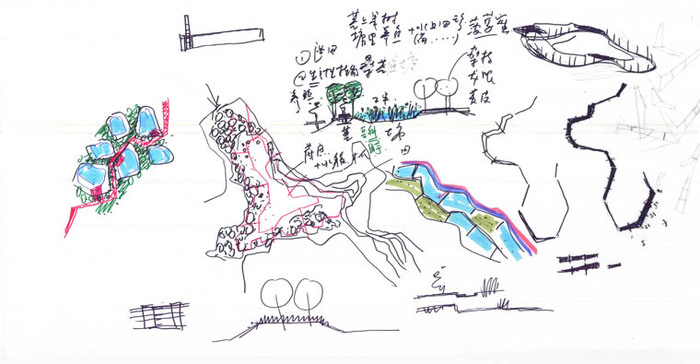
Established in 1988 by Kongjian Yu (Harvard Graduate School of Design) in Beijing, China, Turenscape is a pioneering design institute that has redefined the fields of landscape architecture and urbanism. Under Yu’s leadership, Turenscape has redefined these fields, emphasizing landscape architecture as a vital “art of survival.” This approach addresses contemporary challenges such as urban expansion, environmental degradation, and climate change through inventive practices. Its intervention strategies, including Negative Planning, the Sponge City initiative, Big Foot Aesthetics, and Deep Form, are a testament to Yu's innovative ideas, which prioritize ecological sustainability and functionality. The practice has more than 600 completed projects in China and around the world and has received more than 100 international accolades, including sixteen American Society of Landscape Architects (ASLA) Excellence and Honor Awards, nine World Architecture Festival (WAF) Awards, six AZ Awards, Holcim Awards, the ULI Excellence Award, the Cooper Hewitt National Design Award and the Oberlander International Landscape Architecture Prize.
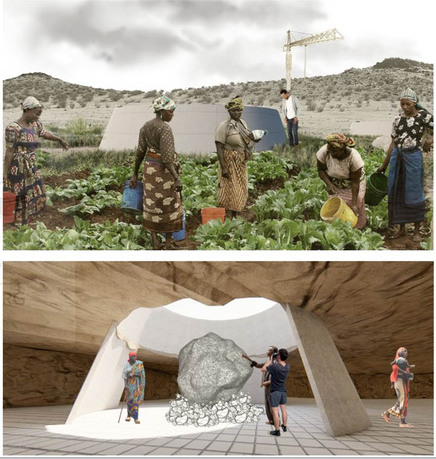
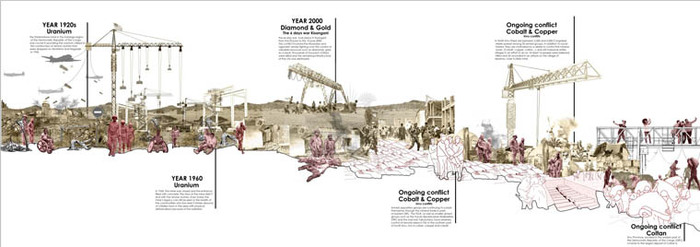
Founded in 2015, Unit15X is an experimental architectural design studio within the graduate school of architecture at the University of Johannesburg, South Africa. Led by Finzi Saidi, head of the architecture department, the studio focuses on exploring landscape-driven, context-sensitive African spatial narratives and encourages students to pursue open-ended outcomes. As a graduate student, Joel Banza chose his home country, the Democratic Republic of the Congo, as a site for transformative change. His proposal addresses the extraction and displacement prevalent across landscapes in Africa through the reclamation of an abandoned mineral-extraction mine. The concept includes an underground museum to commemorate the lives of those lost to conflict and aboveground interventions that transform the landscape into a rich space for community agriculture. Other Unit15X studios projects explore landscape in emergent African cities, including Johannesburg, Kampala, Dar es Salaam, Windhoek, and Zanzibar.
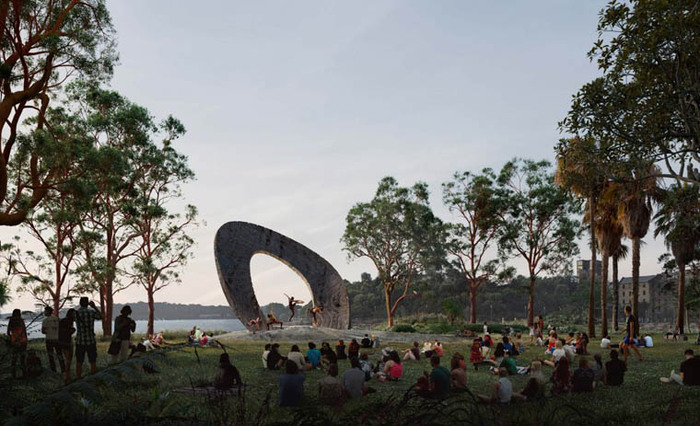
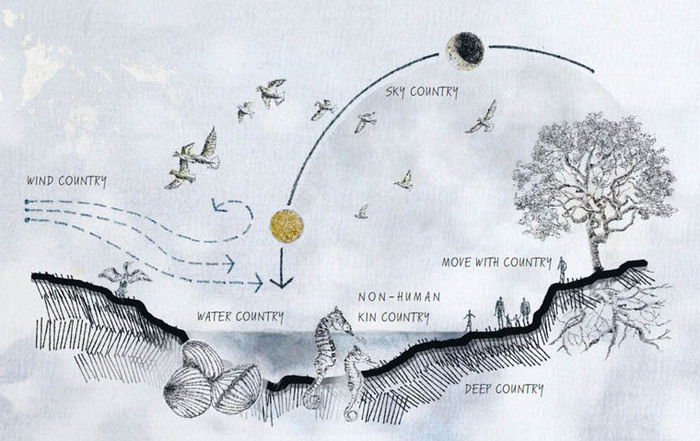
Founded in 2018 in Sydney, Australia, Yerrabingin + AKIN brings together First Nations communities and built environment professionals to integrate First Nations knowledge, perspectives, and values into projects. Their team comprises designers, community engagement specialists, landscape architects, researchers, and artists who work at the intersection of design and culture. Yerrabingin + AKIN provides Designing with Country services for public and private clients, a new approach to design that is collaborative, regenerative, land-focused, and guided by First Nations knowledge. It invites shared custodianship and supports all people in developing individual and collective connections to the places they live, work, and visit. Yerrabingin + AKIN is part of the Indigenous-led AKIN team that won an international competition to design a 1.85-hectare public open space on Sydney Harbor, located on reclaimed land at the edge of the central business district.
Cynthia E. Smith serves as the Cooper Hewitt, Smithsonian Design Museum’s curator of socially responsible design. Smith trained as an industrial designer and has led multidisciplinary design and planning projects. She joined Cooper Hewitt after earning a graduate degree at Harvard’s Kennedy School, where she integrated her professional experience with her advocacy for human rights and social justice. She coauthored “The Politics of Genocide: U.S. Rhetoric vs. Inaction in Darfur” for the Kennedy School Review; coorganized the Social Impact Design Summit and white paper with the National Endowment for the Arts; curated Designing Peace, The Road Ahead: Re-imagining Mobility, and Design with the 90% at the Bill & Melinda Gates Foundation Visitor Center in Seattle; was named a “20/20 New Pioneer” by Icon design magazine; serves on numerous international design juries, including the Resilient by Design Bay Area Challenge; and lectures widely on socially responsible design.
Julie Pastor is a curatorial assistant at Cooper Hewitt, Smithsonian Design Museum, where she develops and produces major exhibitions and publications on modern and contemporary design and manages the museum’s digital collection. She has cocurated and assisted with ten exhibitions at Cooper Hewitt, including Design Across Time (forthcoming 2026), Making Home—Smithsonian Design Triennial (2024), An Atlas of Es Devlin (2023), Design and Healing: Creative Responses to Epidemics (2021), and Willi Smith: Street Couture (2020). She regularly contributes to design publications, serves on juries, and mentors and advises students in design and curatorial studies. She also coleads the museum’s responsive collecting initiative and serves on various Smithsonian committees.
Cooper Hewitt, Smithsonian Design Museum was founded in 1897 and became part of the Smithsonian Institution in 1967. Its mission is to educate, inspire, and empower people through design. It is the nation’s only museum dedicated to historic and contemporary design and is at the forefront of engaging audiences of all ages in design and design thinking. Cooper Hewitt’s permanent collection numbers 215,000 objects spanning thirty centuries—from ancient textiles and Renaissance works on paper to icons of modern design and contemporary born-digital material—and is organized into four curatorial departments: Drawings, Prints & Graphic Design; Product Design & Decorative Arts; Textiles; and Wallcoverings. A Design Library holds more than 80,000 volumes. The museum achieves its mission by offering diverse populations a dynamic selection of exhibitions, education programs, publications, and online resources. In a typical year of operation, the museum welcomes an average of 300,000 visitors to explore its collections, exhibitions, and education and public programs.