Exhibition Architecture: A conversation with Koray Duman
Independent Curators International (ICI)
Sep 14, 2026
(6pm)
Talk
Free; RSVP required
This conversation between architect Koray Duman and Graham Foundation director Sarah Herda will explore the role of exhibition architecture in shaping how artists, curators, and institutions communicate and engage with audiences. Using three aspects of Duman’s work—the curator, the institution, and the artist—as points of departure, they consider how exhibition design can become more than a framework for displaying art, but a tool for advancing curatorial and artistic visions and engaging audiences in new ways. Duman brings layers of storytelling, context, and meaning into projects spanning galleries, museums, biennials, and temporary public projects.
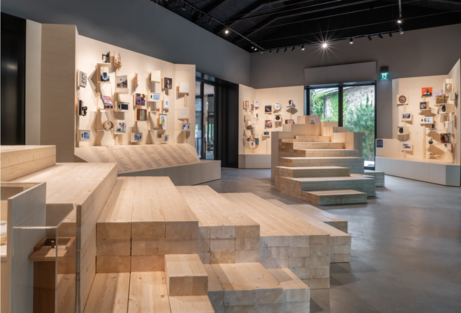
The conversation will begin with the curator, asking: how can exhibition design support and expand the curatorial statement? Duman introduces his work on the 59th Carnegie International and the display device developed for the Chimera installation at this year’s Venice Biennale, to illustrate how space and a cohesive design strategy can support multiple narratives as artists and curators increasingly tackle the complex cultural, social, and political issues of our time in their work. The Chimera installation, along with the Future Schools project, form the basis of their exploration of institutions. How can exhibition design create opportunities for community-building and engagement, and allow institutions to contend with limitations of space and resources while evolving and expanding their roles in society? Finally, they turn to the artist, using the example of Duman’s work with Paul Pfeiffer to consider how the architecture of an exhibition can actively contribute to an artist’s narrative, reveal complex dimensions of their practice, and deepen audiences’ engagement with the ideas they present.
Through frameworks of design in which visitors actively contribute to shared learning, exhibitions become more than sites of passive consumption. By treating them as temporary institutions—spaces capable of responding to temporary questions with greater flexibility than permanent architecture—Duman reveals exhibition-making as a rich tool for deepening connections among audiences, artworks, and the broader issues that artists and curators seek to address.
Presented in conjunction with Chicago Exhibition Week
Koray Duman is an architect and founder of Büro Koray Duman.
Büro Koray Duman (B-KD) is an award-winning, research-driven architecture and design studio based in New York City and Istanbul. Founded in 2013, the international practice approaches design as a tool for connection between people, designing stimulating, adaptable environments that nurture generosity, knowledge exchange, and evolving forms of community. Working across all typologies and scales, B-KD’s past clients include MoMA PS1, MOCA Geffen, Guggenheim Bilbao, the Finnish Cultural Institute NY, the Noguchi Museum, Istanbul Foundation for Culture and Arts, artist Richard Prince, the American Society for Muslim Advancement, and the Center for Art and Advocacy.
Independent Curators International (ICI) supports the work of curators to help create stronger art communities through experimentation, collaboration and international engagement. Curators are arts community leaders and organizers who champion artistic practice; build essential infrastructures and institutions; and generate public engagement with art. Our collaborative programs connect curators across generations, and across social, political and cultural borders. They form an international framework for sharing knowledge and resources — promoting cultural exchange, access to art and public awareness for the curator’s role.
Image: Denniston Hill, Chimera, 2026, installation view, 'In Minor Keys', 61st International Art Exhibition, La Biennale di Venezia. Design by Büro Koray Duman. Photo by Gaia Cambiaggi/Studio Campo. Courtesy of Denniston Hill.

SHIFT: Architecture in Times of Radical Change
Chicago Architecture Biennial
Aug 29, 2026
(3pm)
Book Launch
Free; RSVP required
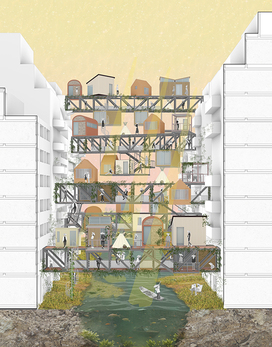
The Graham Foundation and the Chicago Architecture Biennial mark the release of SHIFT: Architecture in Times of Radical Change, published in conjunction with the sixth Chicago Architecture Biennial, led by artistic director Florencia Rodriguez.
SHIFT signals the opportunity and need to change direction—an invitation to think with others and to set new grounds for the interpretation and design of our built environments. Edited by Rodriguez, Santiago Bogani, Igo Kommers Wender, and Isabella Moretti, it is an editorial experiment on dispersion, embracing multiplicity as a method and conversation as a form. Featuring contributions from biennial participants and invited contributors, it acts as a curatorial capsule that extends SHIFT into print, opening new spaces for conversation, collective speculation, and architectural imagination.
Join Florencia Rodriguez and Igo Kommers Wender in conversation with biennial participants Kelly Bair (BairBalliet), Alexander Eisenschmidt, Clare Lyster (CLUAA), and Antonio Torres (The Bittertang Farm), followed by a reception. Copies of SHIFT, co-published by the Chicago Architecture Biennial and Park Books, will be available in the Graham Foundation bookshop.
Kelly Bair, co-founder of BairBalliet, leads a Chicago and Los Angeles practice whose speculative and built work spans architecture, exhibitions, and design research.
Alexander Eisenschmidt directs Studio Offshore, an architecture and urban design practice, and leads The Housing Futures Initiative, with work spanning design, writing, and international exhibitions.
Igo Kommers Wender, an architect, editor, and cultural producer based in Chicago, is associate curator of the 2025 Chicago Architecture Biennial.
Clare Lyster, founder of CLUAA, leads a research practice exploring how logistical and metabolic systems shape architecture, landscape, and infrastructure.
Florencia Rodriguez, founding principal of -NESS, leads an international cultural platform for architecture and served as Artistic Director of the 2025 Chicago Architecture Biennial.
Antonio Torres, co-founder of The Bittertang Farm, leads a playful, inventive design practice based in Chicago and Bainbridge Island whose work explores speculative forms and living materials.
ABOUT THE PUBLICATION
Essays, manifestos, and conversations feature: Kelly Bair; Arno Brandlhuber; Alejandra Celedón; Kate Yeh Chiu; Juan Du; Janet Echelman; Alexander Eisenschmidt; Valeria Esteves; Alison Fisher; Fredi Fischli; Giulia Foscari, UNA/UNLESS; Ignacio G. Galán; Amber Ginsburg; David Gissen; Architensions (Alessandro Orsini and Nick Roseboro); Jia Yi Gu; Akilah Halley; Chana Haouzi; Christopher Hawthorne; Rossana Hu; Daniel Ibáñez; Sam Jacob; Sharon Johnston; Wilfried Kuehn; Mark Lee; Clare Lyster, CLUAA; Simona Malvezzi; Florencia Medina; Caitlin Mueller; Cristiane Muniz; Janell Nelson; Niels Olsen; Tosin Oshinowo; Cristóbal Palma; David Peyceré; Hilary Sample; Gloria Sutton; Martien de Vletter.
The publication includes a five-hour conversation marathon on topics such as new realism, the magic in the ordinary, pleasures in the urban, and the need to critically shift architecture's language with Biennial participants Sebastián Adamo, Lilla Árkovics, Juan Manuel Balsa, Roberto Behar, Erin Besler, Caio Calafate, Sol Camacho, Abigail Chang, Lap Chi Kwong, Rocio Crosetto Brizzio, Attila Csóka, James Dallman, Iman Salam Fayyad, Nathalie Frankowski, Cruz Garcia, Adriana Giorgis, Alison von Glinow, Alejandro Haiek Coll, Grace La, Sean Lally, Frederico Leite, Lara Lesmes, Iván L. Munuera, Mireia Luzzárraga, Masa Mahlek, Maria Vittória Martins, Rosario Marquardt, Szabolcs Molnár, Noelia Monteiro, Daniel Moreno Flores, Frida Mouchlian, Leandro Piazzi, Lolo Rebecca Rudolph, Alejandro Saldarriaga, David Smiló, Alfredo Thiermann, Leonidas Trampoukis, Pedro Varella, Aura Venckunaite, Alex Yueyan Li, Ema Yuizarix, and Oscar Zamora.
Co-published by Chicago Architecture Biennial and Park Books
The Chicago Architecture Biennial convenes the world to explore innovative ideas and collectively imagine the future of design. The Biennial’s large-scale exhibitions, talks, performances, films, and other events, create opportunities to engage timely global issues through the lens of architecture and design, emphasizing creativity and community participation. Free and open to the public, the Chicago Architecture Biennial stands as North America’s largest international survey of contemporary architecture and design.
Image: Estudio Planta, Latin America Informal City 2025. Courtesy Estudio Planta
Constructing Latin America: Architecture, Politics, and Race at the Museum of Modern Art
Patricio del Real
Jun 25, 2026
(6pm)
Talk
Free; RSVP required
Patricio del Real presents his book, Constructing Latin America. Architecture, Politics, and Race at the Museum of Modern Art (Yale University Press, 2022)—a nuanced look at how, through architecture exhibitions, this New York institution became a key agent in cultural politics in the United States and in the consolidation of “Latin American architecture” as a modernist category. Del Real demonstrates how The Museum of Modern Art (MoMA)’s curatorial activities generated and naturalized “Latin America” not only as a stylistic and cultural variant of international modernism but also as a racializing concept at a critical global conjuncture. The idea of “Latin American architecture” was seminal for the interpretation of modern architecture in the twentieth century and, moreover, for MoMA’s international projection as cultural arbiter in the Cold War period. It remains an active category that underpins studies on architectural modernism as a global phenomenon. Constructing Latin America was supported by a grant from the Graham Foundation in 2021. This talk is presented in conjunction with Latinitudes: A Collection of Latin American Modern Architecture by Leonardo Finotti, on view at the Graham Foundation through July 18, 2026.
Patricio del Real is known for his expertise in the field of architecture and architecture history, with a focus in the Americas. His work examines the intersections of buildings, politics and cultural identity. As an architectural historian, he contributes to a deeper understanding of the global dimensions of modernism, shedding light on its unique transformations and adaptations. One of his notable contributions is his focus on institutions and the transnational flows of ideas and practices and how these migrations have impacted both the development of architectural forms and the practices of architects in the second postwar period. Del Real is associate professor in the department of the history of art and architecture at Harvard University. Before his appointment at Harvard, he worked at The Museum of Modern Art’s architecture and design department on several temporary and collection exhibitions, and cocurated Latin America in Construction: Architecture 1955-1980.
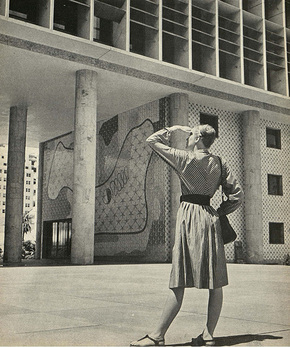
Image: Louise Dahl-Wolfe, Fashion shoot in front of the Ministério da Educação e Saúde (MES), Rio de Janeiro, Brazil, as published in, “Urban Cotton: For Being at Ease,” Harper’s Bazaar, May 1946
For more information on the exhibition, Latinitudes
A Collection of Latin American Modern Architecture, click here.
Nick Dunston with Ben Lamar Gay, Tomeka Reid, Julian Otis & Caroline Jesalva
Lampo Performance Series
Jun 06, 2026
(7pm)
Performance
RSVP required, limited capacity
Nick Dunston premieres Near of Kin, a new song cycle about family—chosen and inherited, contemporary and ancestral, loving and damaging. The title comes from novelist Octavia Butler, whose writing grapples with kinship and power.
With Julian Otis and Ben Lamar Gay on vocals, Gay also on cornet and electronics, and a string trio of Caroline Jesalva, Tomeka Reid, and Dunston.
Nick Dunston (b.1996, Washington, D.C.) is a composer, improviser, and sound artist active in the New York and Berlin experimental music scenes. His work spans large-ensemble composition, improvisation, and multimedia projects, often integrating electronics and live processing.
Dunston has received commissions from Wet Ink Ensemble, Bang on a Can, JACK Quartet, Gaudeamus Festival, A L’ARME Festival, Ekmeles, and others, and has collaborated as a performer with artists including Marc Ribot, Ches Smith, Vijay Iyer, Mary Halvorson, Tyshawn Sorey, Moor Mother, Darius Jones, Lucrecia Dalt, Joy Guidry, Son Lux, Craig Taborn, Dave Douglas, Allison Miller, Anna Webber, and Amirtha Kidambi. In 2019 he received a Van Lier Fellowship from Roulette, supporting the creation of the trans-media song cycle La Operación, the double bass quintet piece The Floor is Lava!, and his debut studio album Atlantic Extraction.
Recent recordings include Spider Season (2022) and the Afro-surrealist-anti-opera COLLA VOCE (Out Of Your Head Records, 2024). Dunston can also be heard on the score to the film Everything Everywhere All at Once (2022). He has presented artist talks at institutions including the University of Southern California, California Institute of the Arts, the University of Iowa, and Stony Brook University. Dunston was nominated for the Deutscher Jazzpreis in 2023, 2024, and 2025, and with Cansu Tanrikulu won the SWR Jazz Prize in 2024.
Lampo, established in 1997, supports artists working in new music, experimental sound, and other interdisciplinary practices. The Chicago-based organization's core activity has been and remains its performance series. Rather than making programming decisions around tour schedules, Lampo invites selected artists to create and perform new work, and then the organization provides the space, resources, and curatorial support to help them fulfill their vision. Lampo also organizes artist talks, lectures, screenings, and workshops, and publishes written and recorded documents related to its series.
Accessibility: This event will be held in the ballroom on the third floor of the Madlener House, which is only accessible by stairs. The first-floor galleries and bookshop are accessible via outdoor lift. Please contact us at 312.787.4071 or info@grahamfoundation.org to make arrangements.
Note: Registration for Lampo programs is required, but does not guarantee entry. Capacity for this performance is limited. Doors open 30 minutes prior to the performance and seats are available on a first-come, first-serve basis for those registered in advance. Reservations expire 5 minutes before the performance start time, at which point seating will be released to the waitlist. Due to the popularity of the Lampo programs, performances quickly reach capacity. No late seating will be permitted.
Photo: G. Richter
Bonnie Han Jones
Lampo Performance Series
May 16, 2026
(7pm)
Free; RSVP required
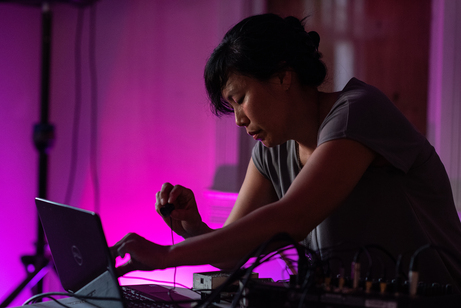
Bonnie Han Jones has created a work inspired by the tradition of Korean pansori—a musical genre incorporating song, story, and gesture—and the sonic ritual practices of female Korean shamans (mudang).
a place where many people gather (soundings) is a quadraphonic performance that considers how sound, heard in shared listening spaces, transforms listeners' relationships to history, to each other, and to place. Jones draws on archival recordings and works with circuit-bent instruments, transducers, inductors, metal, glass, and voice.
Pansori is a compound of the Korean words pan 판 and sori 소리, the latter meaning "sound." Pan is thought to refer either to a song with many tones or to a situation where many people gather, reflecting the format of the pansori performance, which usually lasted three to eight hours and took place in public, communal spaces. The pansori singer is an oral historian, carrying the past into the present.
Bonnie Han Jones (b. 1977) is a Korean American improvising musician, poet, and educator working primarily with electronic sound and text. Her work is iterative and multidisciplinary, and typically involves building concepts through research and study and then moving these ideas through a variety of mediums, methods, and forms. She uses electronic music, recorded sound materials, text, video, performance, and score, with attention to listening and improvisation as a core theme and generative method. The work broadly explores noise, sonic identity, listening as thinking, and sound as knowledge.
Jones performs both solo and in a wide range of collaborative music, film, and visual art projects. She was a founding member of the Transmodern Festival and CHELA Gallery and has been a board member of the High Zero Festival collective. In 2010, she cofounded TECHNE with Suzanne Thorpe, an organization that develops anti-racist, feminist workshops focused on technology-based artmaking, improvisation, and community collaboration.
Jones has received commissions from the ICA, London, and the Walters Art Museum, Baltimore, and has presented her work throughout the United States, Mexico, Europe, and Asia. She was a 2018 recipient of the Foundation for Contemporary Arts Grants to Artists Award. Born in South Korea, Jones was raised on a dairy farm in New Jersey, spent years in Baltimore and Providence, and is currently based in Chicago.
Jones last performed for Lampo in December 2022 and is a contributing artist to the Lampo Folio.
Lampo, established in 1997, supports artists working in new music, experimental sound, and other interdisciplinary practices. The Chicago-based organization's core activity has been and remains its performance series. Rather than making programming decisions around tour schedules, Lampo invites selected artists to create and perform new work, and then the organization provides the space, resources, and curatorial support to help them fulfill their vision. Lampo also organizes artist talks, lectures, screenings, and workshops, and publishes written and recorded documents related to its series.
Accessibility: This event will be held in the ballroom on the third floor of the Madlener House, which is only accessible by stairs. The first-floor galleries and bookshop are accessible via outdoor lift. Please contact us at 312.787.4071 or info@grahamfoundation.org to make arrangements.
Note: Registration for Lampo programs is required, but does not guarantee entry. Capacity for this performance is limited. Doors open 30 minutes prior to the performance and seats are available on a first-come, first-serve basis for those registered in advance. Reservations expire 5 minutes before the performance start time, at which point seating will be released to the waitlist. Due to the popularity of the Lampo programs, performances quickly reach capacity. No late seating will be permitted.
Photo: Chris Grady


 PREVIOUS POSTS