Publication
-
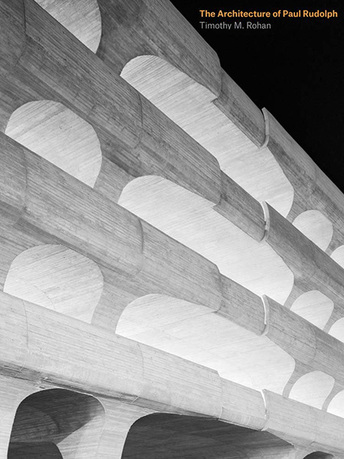
The Architecture of Paul RudolphTimothy M. Rohan
AuthorYale University Press, 2014 -
GRANTEE
Timothy M. RohanGRANT YEAR
2010

Madlener House
4 West Burton Place
Chicago, Illinois 60610
Telephone: 312.787.4071
info@grahamfoundation.org
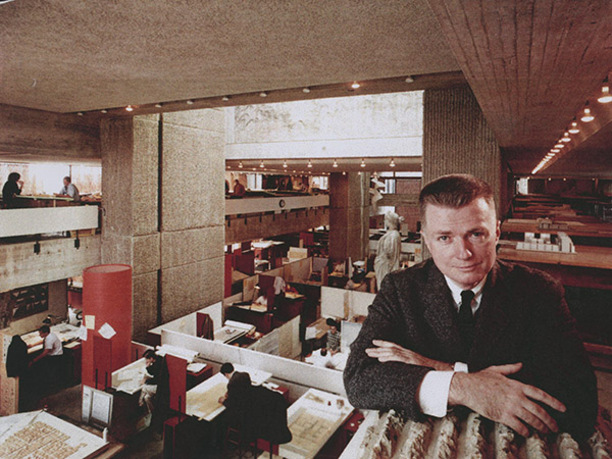
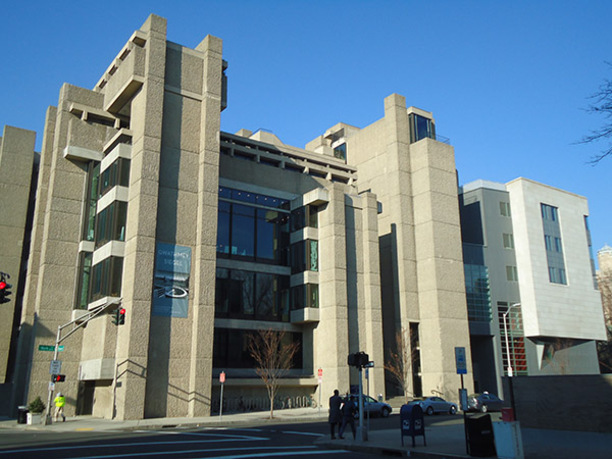
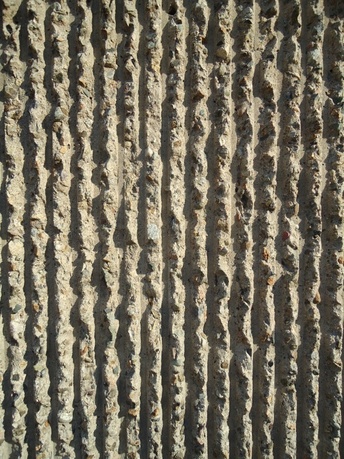
Paul Rudolph leans upon a fragment of his corrugated concrete in the drafting room of his Yale Art & Architecture Building, 1958-63, New Haven, CT. Courtesy of the Library of Congress, Prints and Photographs Division.
The Architecture of Paul Rudolph examines the work of Paul Rudolph (1918–1997), one of the most important architects of post-World War II America. Rudolph has often been dismissed as the creator of idiosyncratic buildings, such as his Yale Art & Architecture Building (1958–63). This book provides a historically based interpretation that explains Rudolph's sixty-year career as a sustained effort to develop a bold, expressive architecture whose origins lay in the post-war period's attempts to develop alternatives to the International Style. The book looks beyond Rudolph's mid-60s apotheosis to the events that caused his downfall and examines his lesser known, later domestic works, and tall buildings in Asia. The treatment of Rudolph's spectacular rise and fall considerably deepens understanding about postwar architecture. Rescued from history's sidelines, Rudolph emerges as a pivotal figure who anticipated new directions for architecture from postmodernism to sustainability.
Timothy M. Rohan is associate professor of architectural history at the University of Massachusetts (UMass), Amherst. He completed a dissertation on Paul Rudolph at Harvard University in 2001. With the Graham Foundation's support in 2003–04, he researched Rudolph's relationship to postwar urbanism. From 2006 to 2008, he helped catalog Rudolph's archive at the Library of Congress. Drawing upon this research, Rohan curated an exhibition at Yale in Fall 2008 about Rudolph's New Haven and Yale projects that was the first to situate his work in a cultural and political context. At Yale in January 2009, he also organized a symposium on Rudolph featuring an international group of scholars. He has published articles on Rudolph in the leading journals of architectural history. During 2008-09, fellowships from UMass, Amherst and private foundations funded a year of academic leave for Rohan, resulting in the first monograph on Rudolph.
Copyright © 2008–2026 Graham Foundation. All rights reserved.